
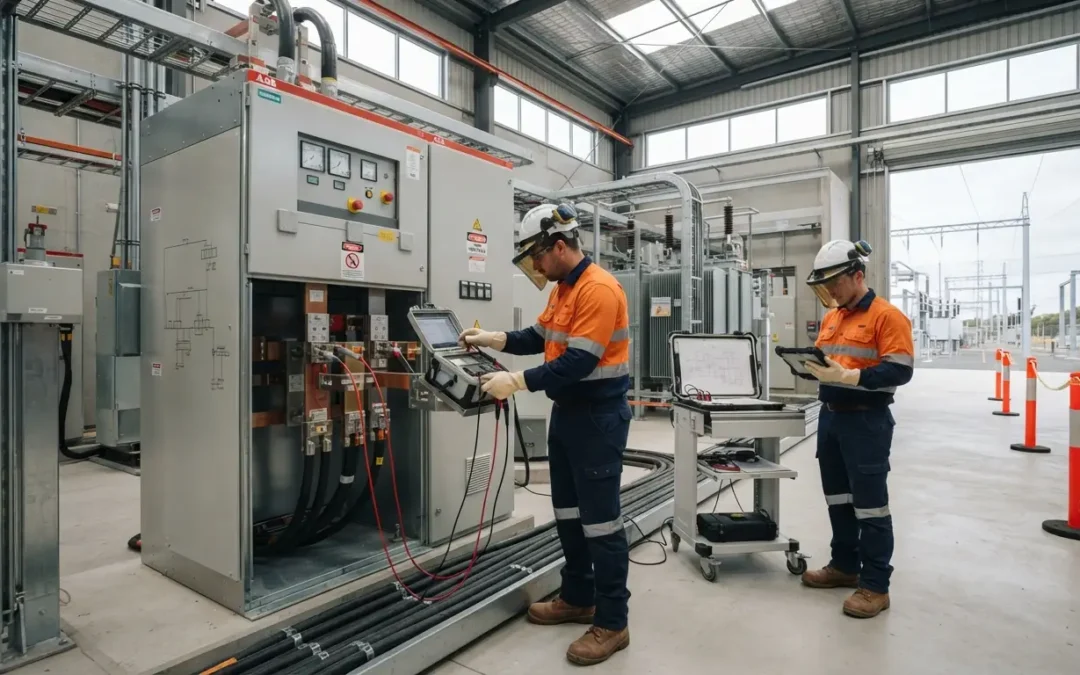
High voltage systems are critical to the operation of many commercial, industrial, utility and infrastructure facilities across Melbourne. When faults remain undetected, they can lead to equipment damage, unexpected outages, safety risks, and costly disruption. High voltage testing services provide a practical way to identify weaknesses, verify equipment performance, and support the reliable operation of HV electrical systems.
What Do High Voltage Testing Services Check?
High voltage testing goes beyond simply confirming whether equipment is operational. It helps assess the condition and performance of key electrical assets, including transformers, cables, switchgear, circuit breakers,, and protection systems.
Depending on the equipment and project requirements, testing may include insulation resistance testing, Very Low Frequency (VLF) cable testing, partial discharge diagnostics, Tan Delta testing, winding resistance measurements and other specialised electrical diagnostics. The appropriate testing method depends on the asset, its condition, operating environment, and the purpose of the assessment.
Why Does HV Testing Matter in Melbourne?
For Melbourne businesses and infrastructure operators, electrical reliability can directly affect productivity and operational continuity. Identifying developing problems before they result in equipment failure can help reduce the risk of unplanned downtime, costly repairs, and premature asset replacement.
Testing also forms an important part of electrical safety and compliance processes. In Victoria, Energy Safe Victoria requires prescribed high voltage electrical installation work to be satisfactorily tested in accordance with the applicable regulatory requirements before an inspector can be satisfied with the installation.
Testing and Commissioning: What’s the Difference?
HV testing and commissioning are closely related, but they serve different purposes.
Testing focuses on evaluating individual components and identifying issues such as insulation deterioration, incorrect operation, or equipment faults. Commissioning takes a broader system-level approach, verifying that equipment has been installed correctly, integrated properly and operates as intended.
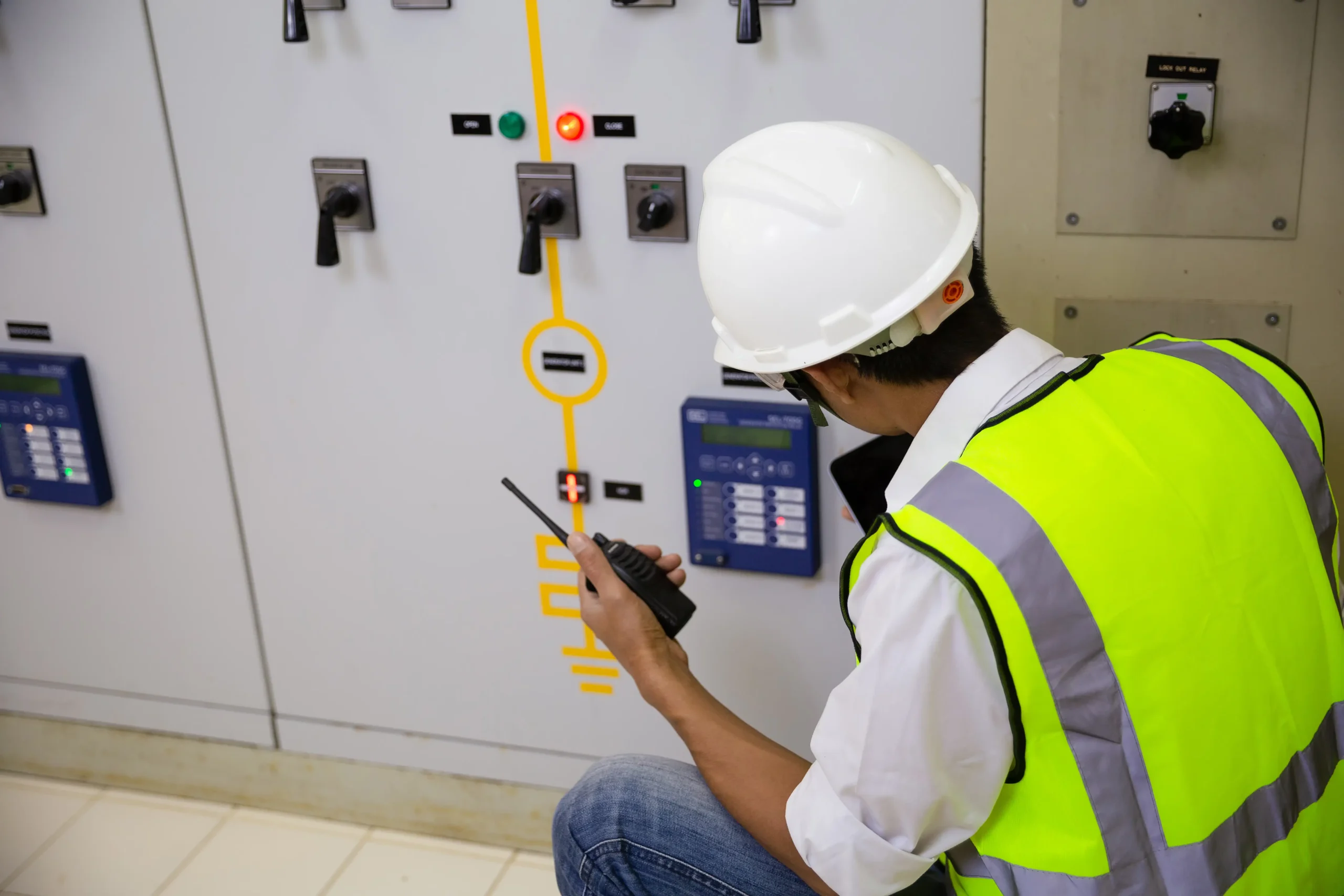
This can include system verification, functional performance assessments, protection relay testing and instrument calibration before an HV system is placed into service.
When Should HV Equipment Be Tested?
Testing may be appropriate when commissioning a new installation, following repairs or modifications, during planned maintenance, or when investigating unexplained trips and equipment problems.
Rather than applying the same testing schedule to every installation, asset owners should consider equipment condition, operating environment, manufacturer recommendations and applicable requirements when planning their testing program.
Choose a Specialist HV Testing Partner
Effective testing depends not only on specialised equipment but also on correctly interpreting the results. ProT Assist provides high voltage testing, commissioning and electrical diagnostics in Melbourne, with experience across power, industrial, commercial and infrastructure applications.
For Melbourne businesses, professional HV testing can provide greater visibility into the condition of critical electrical assets and help address potential problems before they become operational failures.
Contact Details:
1300 776 827
enquiries@protassist.com.au